
Our Townships
Athens Township
Bradford Township
Cambridge Township
Dalbo Township
Isanti Township
Maple Ridge Township
North Branch Township
Oxford Township
Stanchfield Township
Spencer Brook Township
Wyanett Township
Springvale Township
Stanford Township
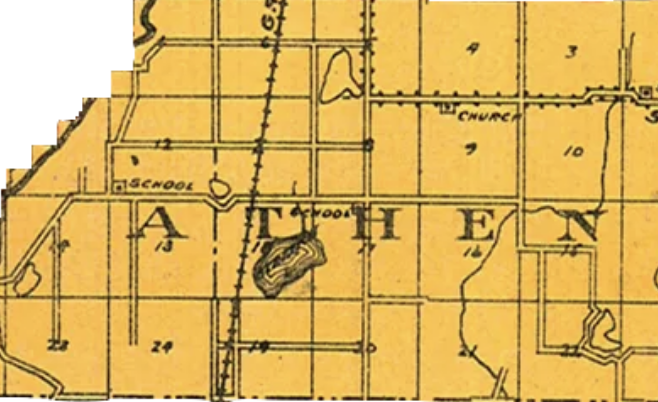
Athens Township
Athens was part of Isanti Township until 1878. The first settlement was made along the river near St. Francis in 1855.
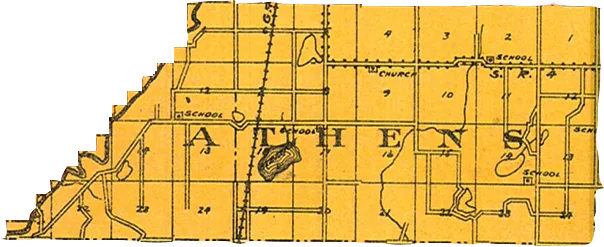
John Irving came that year from New York followed by his wife and son the following year. The Bennett brothers came in 1855. Wm. Thompson, Mr. Littlefield and Charles Chandler came in 1856. John Strong, later a member of the State Legislature, came in 1857. Jonas Selin, Hans Dalin and Erick Wallin came in 1865. John Sutter came in in 1868, followed by a large number of Swedish immigrants in 1872 and the years following.
Many of the Swedish settlers were from the parish of Rättvik in Dalarna, Sweden and they became part of the “transplanted community” that Dr. Robert Ostergren refers to in his research.
The plat of a forgotten town called Ramsey, located on both sides of the river in Athens and Stanford Townships, is on record. Ramsey Island was designated as a public park.
School Districts
No. 9-Central Athens, 12W
No. 20-Cedar Creek, 2
No. 21-Athens, 17
No. 48-Hawthorne, 23
Churches & Cemeteries
Swedish Lutheran, 10 (Athens-predecessor of Faith Lutheran in Isanti)
Swedish Mission Church, 5
Gerdin cemetery, 8
Businesses & Suites
Athens Post Office, 9
Blacksmith Shop, 3, 14
Creamery, 8
Store, 4, 12
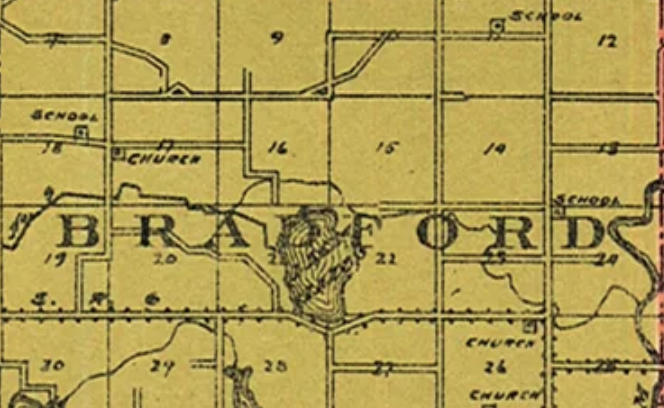
Bradford Township
Bradford Township was established in 1875. Before that time it had been a part of Springvale.
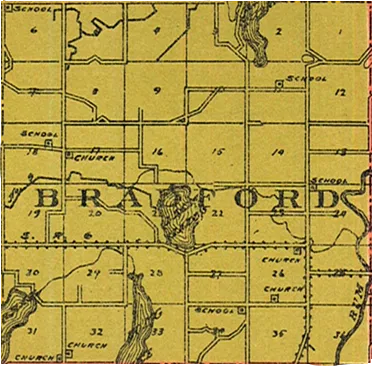
The township was named by Rev. Charles Booth, and Episcopal minister from Bradford, England, who took a claim in the township in the early 1870’s.
He served as a missionary/circuit rider, holding regular church meetings (in English) at the Cambridge school house and other points around the county. He also served as county superintendent of schools for many years.
The McKenneys were early settlers and F. E. McKenney had a store and post office near the first school in the township, No. 7.
Other early settlers were the Albrechts, Margets, Kienitzs, Kriesels, Klucks, Strikes, Ulrichs and A. C. Smiths-German immigrants as well as New Englanders. Later, Swedish immigrants settled there, some of the earliest being the Engquists.
School Districts
No. 7-Bradford, 18
No. 17-Sandy Knoll, 34
No. 35-Kienitz, 11
No. 36-Bergdahl, 24
Churches & Cemeteries
German Lutheran Church (and Cemetery), 26 (St. John’s)
German Congregational Church and Cemetery, 26 (Cemetery has been later referred to as Strike Cemetery)
E. Bradford Cemetery, 22 (Kienitz)
Union Church, 17
Swedish Lutheran Church, 32 (Long Lake)
Swedish Baptist Church, 31
Businesses & Suites
Bradford Post Office, 18 (See also Spencer Brook Township)
Blacksmith Shop, 13
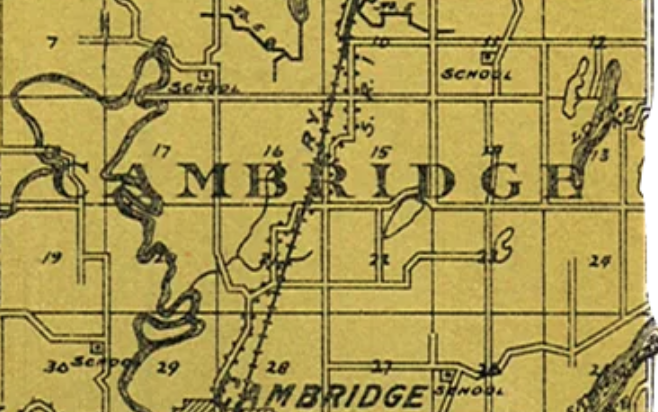
Cambridge Township
Cambridge township was established in 1869, the year that Ira Conger and D. G. Miller filed the first plat of the town at its present site. It was also in that year that the decision was made to locate the county courthouse in Cambridge rather than Isanti.
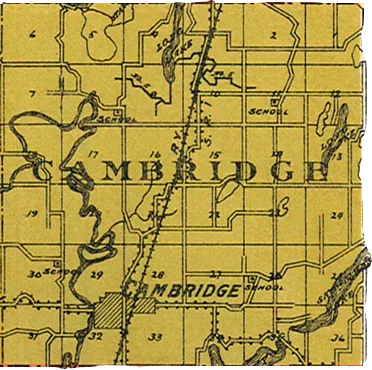
During the early years of the county before there was much permanent settlement, the entire area was referred to as the Cambridge Precinct mainly because the only post office was at Cambridge.
The township is divided by the Rum River. Before there was a bridge at Cambridge, ferries were operated by Ira Conger and B. L. Gifford.
The areas of the township were often referred to as west Cambridge, North Cambridge and East Cambridge.
Issac Edblad, who was originally from Sweden, came from Wisconsin in 1859 and built a cabin just north of the present Cambridge. Many of the fellow Lutherans who followed shared his cabin while building their own and also used it as their first place of worship. Early settlers in North Cambridge were the Becklins, Hokansons and Bergmans.
P. L. Moody came to East Cambridge in 1864. He was followed by the Torells, Rapps, Longs, Lawsons and Andersons.
The Forsbergs and Holmbergs were some of the early settlers in West Cambridge.
Most of the present town of Cambridge was developed from property belonging to S. S. Bunker, Ira Conger and J. P. Woodman.
School Districts
No. 4-in the town of Cambridge
No. 6-Moody, 26
No. 18-Oak Hill , Strom or Gable, 8
No. 23-Stake, 11
No. 38-West Riverside or Forsberg, 30
Churches & Cemeteries
Swedish Lutheran Church and Cemetery, 29 (Cambridge Lutheran-Swedish Lutheran Church indicated on Section 21 was land donated by the railroad for a cemetery but was never used for that purpose.)
Swedish Adventist Church 11 (and Cemetery)
Swedish Baptist Church, 10 (a chapel for the Stanchfield Baptist Church)
Businesses & Suites
Feed Mill, 1, 20
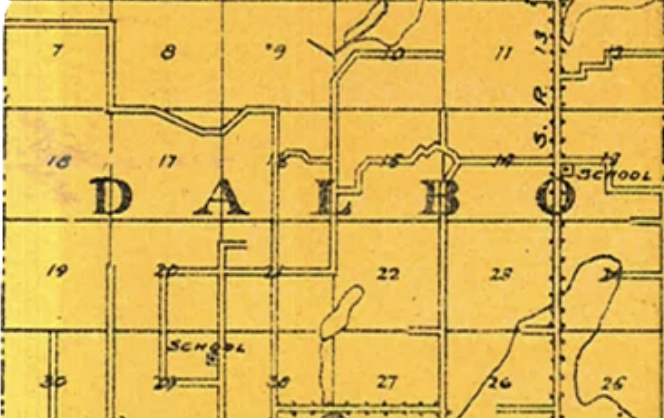
Dalbo Township
Dalbo is the youngest township having been established in 1886. It is the only township in the country with a Swedish name. Dalbo means “home of the Dalcarlians,” the people from the province of Dalarna, Sweden. In 2013, Dalbo was recognized as the sister city to Venjan, Sweden
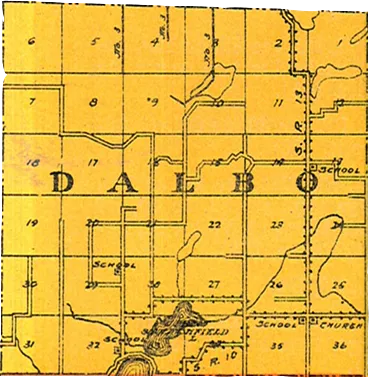
Some of the earliest settlement occurred in the vicinity of the two Stanchfield Lakes in the western part of the township. The Lundbergs, Kronas and P. S. Swanson’s settled there. Other early settlers were the Eric Nelsons, Andrew Blixts, Ole Mattsons, Lars Olson and Louis Andersons.
The two lakes are drained by Stanchfield Creek which winds through the township and also through Maple Ridge and Spring Vale before it flows into the Rum River. The town of Dalbo was established in the southeast part of the township.
A large area of the northwestern part is swamp and bog largely owned by the St. Paul and Duluth Railroad Company.
School Districts
No. 40-Lincoln or Dalbo, 35
No. 52-Carmody, 32
No. 54-Wittier or Tolin, 13
Churches & Cemeteries
Baptist Church and Cemetery, 36 (Dalbo)
Businesses & Suites
Dalbo Post Office, 36
Blacksmith Shop, 33
Feed Mill, 36
Sawmill, 33
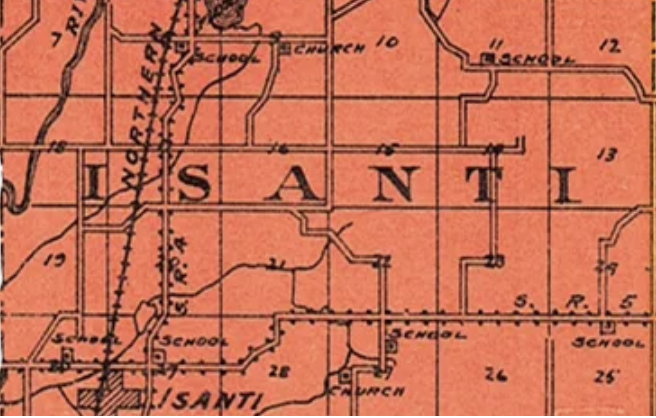
Isanti Township
Isanti Township was established in 1872. The northern part of the township near Paul’s Lake was the site of the original town of Cambridge, platted in 1856. Several letters of Harriet Griswold are on file with the Minnesota Historical Society which tell of the hardships she suffered in the area from 1856 to 1861 following the death of her husband, Allen, who had been of those active in sales of Cambridge lots.
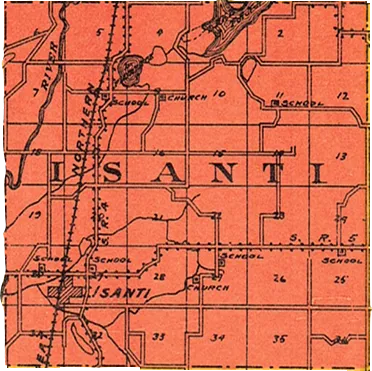
A number of Swedish immigrants came by way of the Chisago Lakes area to the township in the early 1860’s to begin the loosely organized town of Isanti. Among them were Daniel Lundquist, Jonas Norell, the Shuleans, Eastlunds and the Noreliuses. George Nesbitt, a New Yorker, had a hotel and livery barn at the junction of the Princeton-Sunrise Road and the Anoka-Brunswick Road. The latter was sometimes referred to as the Manomin Trail-Manomin being the Ojibway term for wild rice.
After Nesbitt moved to Cambridge in the 1870’s, the town of Isanti virtually disappeared until it was re-established at the turn-of-the-century in Section 30 when the railroad was built.
School Districts
No. 3-Edgewood, 8
No. 24-Blomford, 25
No. 30-Skalin, 11
No. 45-Oak Grove, 29
No. 53-Pershing, 27
Churches & Cemeteries
Swedish Baptist Church and Cemetery, 9 (North Isanti)
Swedish Baptist Church, 22 (South Isanti)
Swedish Adventist Church, 27
Cemetery, 24 (Lindberg or Big Meadows)
Cemetery 34-no longer exists
Businesses & Suites
Blomford Post Office and store, 25 (see also North Branch Township)
Isanti Post Office, 17 (Old Isanti)
Blacksmith Shop, 24
Sorghum Mill, 2
Grange Hall, 15
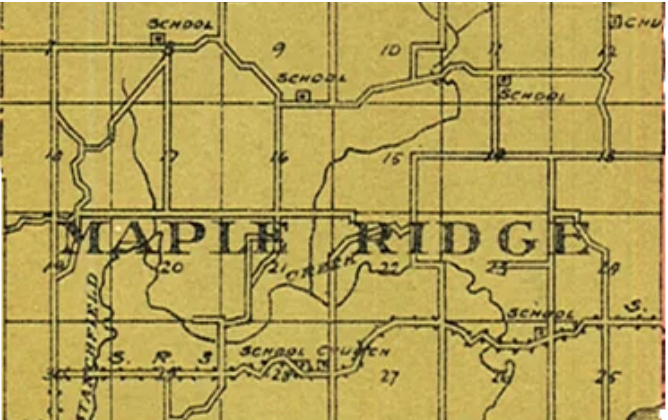
Maple Ridge Township
The township was established in 1869 and included Dalbo and Stanchfield.
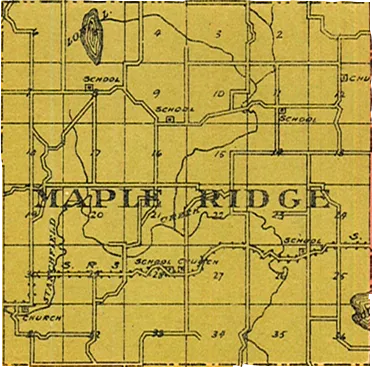
Mail was carried by stage from Cambridge to the Day and Maple Ridge Post Offices. Day later moved a mile and a half north to a crossroads at the center of Section 5. The first Day School (No. 19) was also located in Section 18. In the 1890’s it moved to Section 8 and became No. 50.
While the Lewis Lake Post office was in Maple Ridge Township, the lake by that name is just across the border in Kanabec County.
H. A. Lory, from New England, bought the land around the lake that bears his name and developed the natural cranberry bog there into a commercial operation for a number of years.
Early settlers to Maple Ridge were the Wrights, Lunnys and Ushers. Among the first Swedish settlers were the A. D. Sholbergs, Sigfried Andersons, Eric Olsons and Henry Johnsons. Their journey to America from Venjan in the province of Dalarna, Sweden is recounted in an article entitled “A Letter From One Generation to Another,” written by Olof Olson, a son of Eric.
School Districts
No. 26-Hiawatha (or Conger), 11
No. 28-Washington (or Oberg), 26
No. 50-Day, 8
Churches & Cemeteries
Swedish Lutheran Church (and Cemetery, 31 (Salem)
Swedish Lutheran Church (and Cemetery, 9 (Siloa)
Swedish Mission Church and Cemetery, 12 (North Maple Ridge Covenant)
Swedish Mission Church and Cemetery, 28 (South Maple Ridge Covenant)
Businesses & Suites
Day Post Office, 18
Lewis Lake Post Office, 6
Maple Ridge Post Office, 11
Blacksmith Shop, 2
Feed Mill, 11
Saw Mill, 2
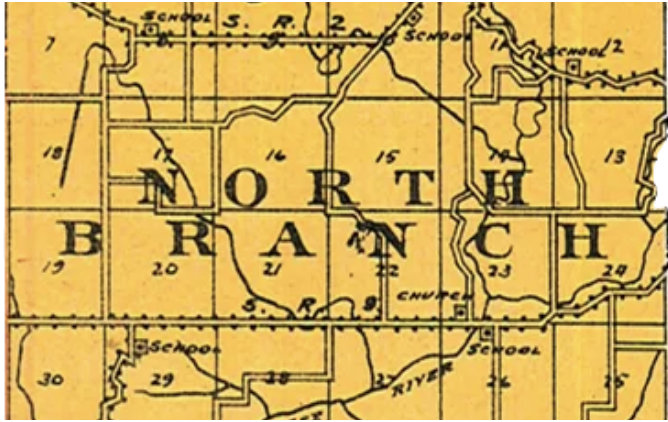
North Branch Township
North Branch Township vies with Spencer Brook for having the earliest settlement in the county. By the time the county was established in 1857 there were already a number of settlers. Among them were J. P. Owens, the Huntleys, and the Henricks.
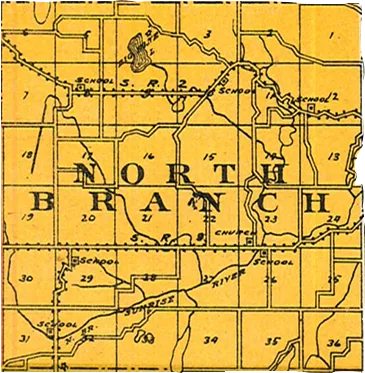
It was on a farm owned by Owens that the Cornstalk War in 1857 was precipitated (see “Minnesota’s First White-Indian War Begins in Isanti County” in Isanti County, Minnesota-An Illustrated History by Bergstrom and McGriff.
The township is named for the north branch of the Sunrise River that flows through it. It was officially organized in 1869. At one point a petition was presented to the County Board to have the township be named Congress but that name was rejected.
A number of Germans settled in the southern part of the township in the Weber community. They were primarily from northern Germany, Posen, Pomerania or West Prussia. Among them were the Kruegers, Maaskes, Steinbrings, Splittstosers, Bahnemans and Pohls.
The Spring Lake community was settled mostly by Swedish immigrants from the province of Småland. The Younquists, Charles Ericksons, Dahls and Samuelsons were some of the first settlers in that area.
School Districts
No. 2-Spring Lake, 10 (Numbers 2 and 13 are exchanged on the map)
No. 13-Pierce, 26
No. 27-Pine Lake, 8
No. 34-Weber, 29
No. 64-McKinley, 12
Churches & Cemeteries
German Lutheran Church, 31 (St. John’s)
Parsonage, 27 (St. John’s Cemetery)
Lutheran Church and Cemetery, 11 (Spring Lake)
Businesses & Suites
Blomford Post Office and Store, (See Isanti Township, Section 25)
Spring Lake Post Office and Store, 11
Stanley Post Office and Store, 7
Weber Post Office and Store, 32
Blacksmith Shops, 3, 13, 36
Creamery, 3
Sorghum Mill, 13
Store, 7
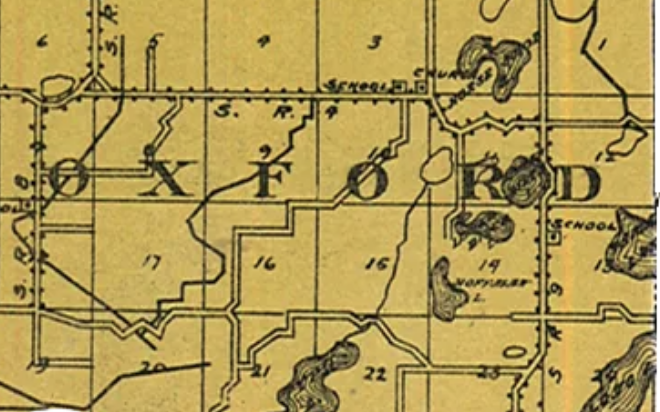
Oxford Township
Oxford Township was a part of North Branch until 1878 when it became a separate entity. It is a small township, having only 24 sections. The southern part of Township 34N lies in Anoka County.
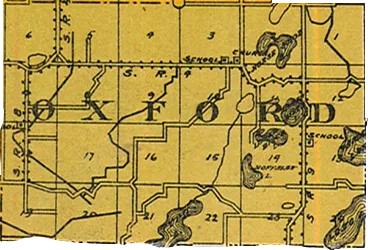
Like North Branch it had some of the earliest settlers in the county, particularly in the eastern part. Three post offices are still indicated on the 1898 map-Cushman, Oxford and Hewson. Stephen Hewson was a Methodist minister, postmaster, Judge of Probate, County Board clerk, auditor and state legislator.
The Shorrocks, Grants and Pierces were other early settlers prior to the influx of Swedish immigrants. The Lillegrens, Bellins, Borgs, Larsons and Tanglunds were among the earliest Swedes.
School Districts
No. 5-Oak View, 14
No. 43-Oxford, 3
No. 47-Oakland, 18
Churches & Cemeteries
Swedish Free Mission Church, 9 (Church is no longer in existence but there is a cemetery across the road.)
Swedish Lutheran Church (and Cemetery), 3 (Salem)
Businesses & Suites
Cushman Post Office, 10
Hewson Post Office, 12
Oxford Post Office, 21
Store, 3
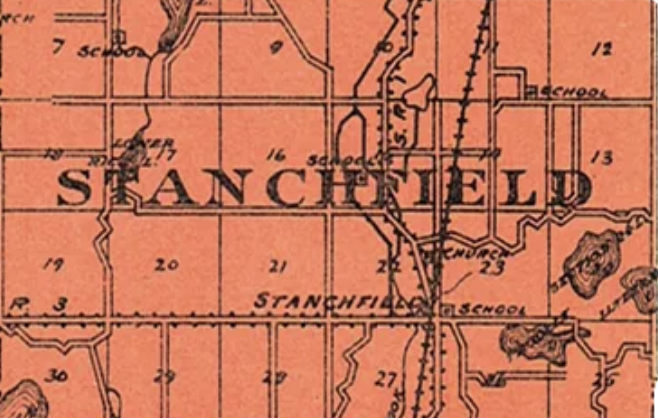
Stanchfield Township
The township is named for Daniel Stanchfield, a timber cruiser from Maine who had logged white pine in the area in the late 1840’s.
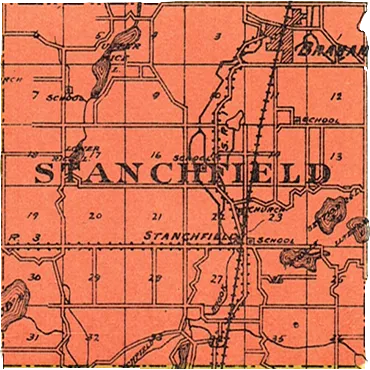
Prior to its establishment in 1874, Stanchfield Township was a part of Maple Ridge.
While both Stanchfied and Braham have post offices indicated on the map, they both moved when the railroad was built in 1899. Stanchfield’s eventual location is a mile to the southeast, and Braham moved just one-half mile east.
Early settlers in the vicinity of the Stanchfield post office were Peter Sund, Louis Dahlman, M. A. Peterson, Erick Erickson and Hans Larson, all from the village of Orsa in the province of Dalarna, Sweden.
Other early settlers were the Grays, Ridgeleys, Shufelts and Niles’.
A creek from Rice Lake in the northwest part of the township flows into the Snake River in Kanabec County.
School Districts
No. 10-Stanchfield, 26
No. 14-Rice Lake, 8
No. 22-Elmwood, 11
No. 39-Elm Park, 29
No. 41-Pine Cone, 15
Churches & Cemeteries
Swedish Lutheran Cemetery, 4 (Rice Lake)
Swedish Baptist Church and Cemetery, 27 (Stanchfield Baptist) (The Swedish Baptist Church listed on section 22 is the Parsonage.)
Businesses & Suites
Braham Post Office, 2
Stanchfield Post Office, 15
Blacksmith Shops, 18, 25, 26
Creamery, 2
Planing Mill, 22
Saw Mill, 22, 29, 32
Store, 2
Grange Hall, 29
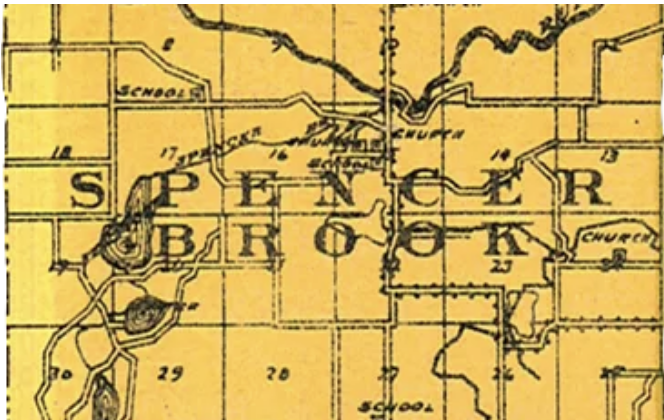
Spencer Brook Township
There were a number of settlers in Spencer Brook during the mid-1850’s, all from New England. The first school district was organized about 1860 and the township was established in 1857.
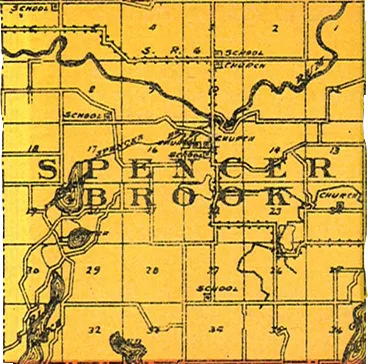
The township is named for Benjamin Spencer, who came to the area in 1855. He was followed by the Iliffs, Cloughs, Staddens, Mackenzies, Donnellys and Scanlans. The Kings, Nichols, Bartons, Cleverlys, Walkers, Howards and Ellingwoods were also early settlers.
The Rum River divides the township. A ferry just north of Spencer Brook was established in 1870. A bridge that was built in 1874 was demolished by ice the following spring.
The brook itself begins in Tennyson (or Lund) Lake and empties into the Rum River just north of the village. The brook was dammed for the grist mill, and the millpond was a popular recreation area for the residents of Spencer Brook.
Dave Clough, who grew up in Spencer Brook, later became the thirteenth governor of Minnesota in 1893.
School Districts
No. 1-Spencer Brook, 15
No. 11-Washington, 3
No. 12-Prescott, 8
No. 37-Chapman, 27
No. 46-King, 6
Churches & Cemeteries
Baptist Church (Spencer Brook), 15
M. E. Church (Spencer Brook Methodist), 15
Swedish Cong. Church, 24
Cemetery, 17 (Clough)
Cemetery, 10 (King)
Cemetery, 14 (Nichols or Nicholas)
Businesses & Suites
Bradford Post Office (See also Bradford Township, Section 18)
Spencer Brook Post Office, 15
Grist Mill, 15
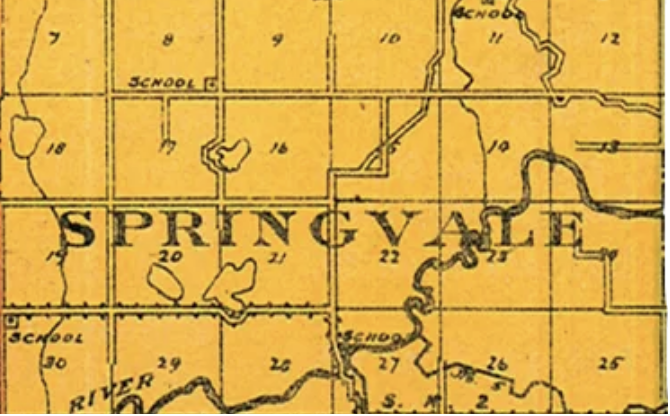
Springvale Township
Springvale Township was established in 1870 and included Bradford for a time. The first settlers came to the area of Walbo in the mid-1860’s. Among them were Ole Wicklund, Ole Lindquist, D. H. Findell, Eric Molin, John Wallin, John Eklund, A.Westblad and H. August Reineccius.
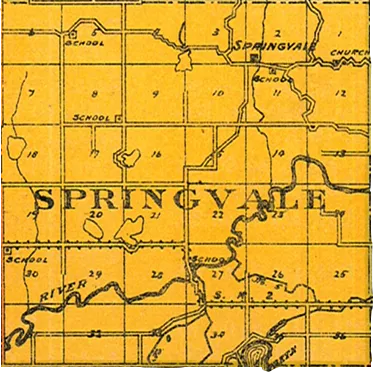
The Rum River travels through the township from southwest to northwest, and Stanchfield Creek joins the river in Section 23. A ferry was established in 1873 at Walbo and by 1898 there was a bridge, referred to as the Findell Bridge.
A brick yard in Section 13 produced yellow-toned bricks that were used in the construction of a number of homes in the area as well as in the West Riverside School.
The community of Springvale was established in the late 1860’s. Early settlers there were Daniel Bodfors, Jonas Dahlin, Peter Mattson, Hans Forsell, the Geseliuses, and the Ossels. A dam on Stanchfield Creek (or Tise Creek as it was sometimes called) furnished power of a saw and flour mill.
Erick Bjorklund built a carding mill at a place called Good Hope Point on Stanchfield Creek in the 1880’s. It was the forerunner of the Cambridge Woolen Mills.
School Districts
No. 16-Walbo, 27
No. 29-Franklin, 11
No. 44-West Springvale, 5
No. 51- Pine Brook, 30
Churches & Cemeteries
Swedish Baptist and Cemetery, 12 (Springvale Baptist)
Businesses & Suites
Springvale Post Office, 2
Walbo Post Office, 27
Blacksmith Shops, 4, 13, 28
Brickyard, 13
Planing Mill, 2
Sawmill, 10
Stores, 2, 28
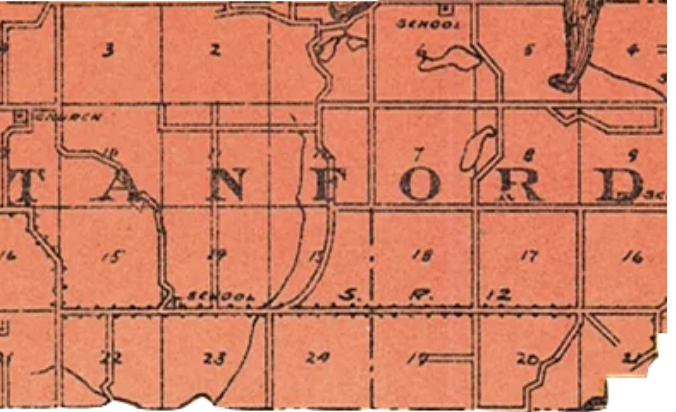
Stanford Township
Originally called Lee Town, Stanford Township was organized in 1869. Like Athens, it is an odd-shaped township, having as its border on the east, the Rum River. Thus, those sections in Range 24W are referred to as East Stanford, and there is a separate index of landholders for those sections.
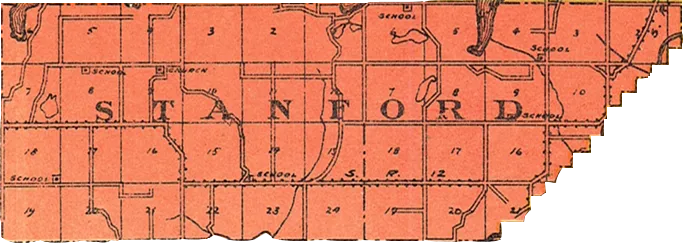
Stanford’s first settlers were mostly of German descent who settled in the vicinity of Crown, establishing a German Lutheran Church and parochial school. Some of the early settlers were the Stoeckels, Hasses, Kriesels, Lemkes, and Wittlefs.
Stanford Township boasts the largest number of Century Farms in the county.
Some of the other names associated with early settlement in Stanford Township are the Engrens, Claysons, Danefelzers, Lindmans, Jobes and Schwabs.
In 1898 no bridge yet crossed the Rum River so residents of Stanford Township were forced to travel north through Bradford and cross the river west of Old Isanti in order to conduct business at Cambridge. St. Francis and Anoka were more convenient trade areas for the Stanfordites.
School Districts
No. 8-Garfield, 14
No. 15-Crown, 8
No. 25-Long Lake, 6E
No. 31-9E (A school district that was later dissolved. A school in Springvale Township then took the number of 31.)
No. 49-Oakdale, 18
Churches & Cemeteries
Cemetery, 10E (East Stanford)
German Lutheran Church and Cemetery, 9 and 4 (Zion)
Businesses & Suites
Crown Post Office, 9
Stanford Post Office, 4E
Blacksmith Shops, 12, 14
Feed Mill, 10E
Grist Mill, 10E
Store, 9
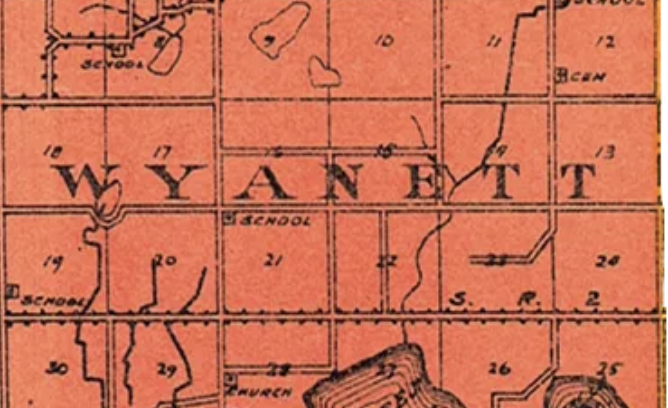
Wyanett Township
Wyanett is the only township in the county with an Indeginous name. It is Ojibwe for beautiful.
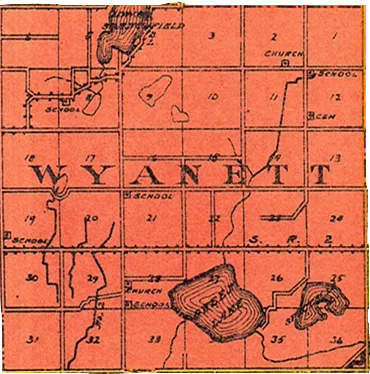
The township was established in 1875. While it is a standard township with 36 sections, its southern boundary was often thought to stretch into Spencer Brook Township to include those sections which are north of the Rum River.
Green Lake, Spectacle Lake and a portion of Lower Stanchfield Lake are found in Wyanett Township. A brook flowing out of Green Lake meets the Rum River at the extreme southeast corner of the township.
A Native American burial mound, measuring 100 feet in diameter and 17 feet high-one of the largest in the state-was surveyed in 1890 on Sections 26 and 27 near Green Lake.
Some of the early settlers in Wyanett were Dan Murray, I. F. Mudgett, Avery and Phineas Gates, Ole Petterson, Eric Flink, Andrew Roadstrom, Anders Gustaf Moller, Calvin Howard and Eric Ericson.
School Districts
No. 32-Gates, 8
No. 33-Karmel, 12
No. 42-Pioneer, 21
Churches & Cemeteries
Swedish Mission Church and Cemetery, 2 (Karmel Covenant)
Cemetery, 12
Businesses & Suites
Wyanett Post Office, 13
Blacksmith Shop, 24
Carpenter Shop, 25
Store, 11